
Call Us
+86-15017908688
Website
www.synspeed.com
- All
- Product Name
- Product Keyword
- Product Model
- Product Summary
- Product Description
- Multi Field Search

Views: 0 Author: Vanstron Publish Time: 2026-08-26 Origin: Site


Overview
Even PCBAs that appear perfectly clean after SMT manufacturing hold micro‑level invisible contaminants: flux residues, oily fingerprints, fine grease, micro‑dust and organic impurities. These subtle surface contaminants frequently trigger conformal coating defects including de‑wetting, fish‑eyes, blistering and coating delamination, ultimately leading to premature product failure in service. For automotive electronics, industrial control modules, medical electronics and other mission‑critical products, insufficient surface pre‑treatment results in excessive rework, scrap output and costly warranty claims.
Traditional wet chemical cleaning workflows introduce notable drawbacks: solvent waste generation, lengthy drying cycles, complex chemical waste disposal, and risks of residual ionic contamination. Designed for seamless production‑line integration, the Vanstron PLS‑450 Inline Plasma Treatment System provides fully‑automated atmospheric‑pressure dry plasma pre‑treatment, purpose‑built to solve surface preparation challenges right before conformal coating, adhesive bonding and subsequent assembly processes。
Running on compressed air without extra carrier gas supplies, this inline plasma machine eliminates the need for liquid cleaning chemistry. It removes surface contaminants while modifying substrate surface energy, all within your existing SMT production tact time. The unit supports standalone operation as well as inline deployment, easily connecting to upstream and downstream manufacturing equipment via SMEMA communication protocol for end‑to‑end automated production flow.

Working Principle: Atmospheric Plasma Cleaning & Surface Activation
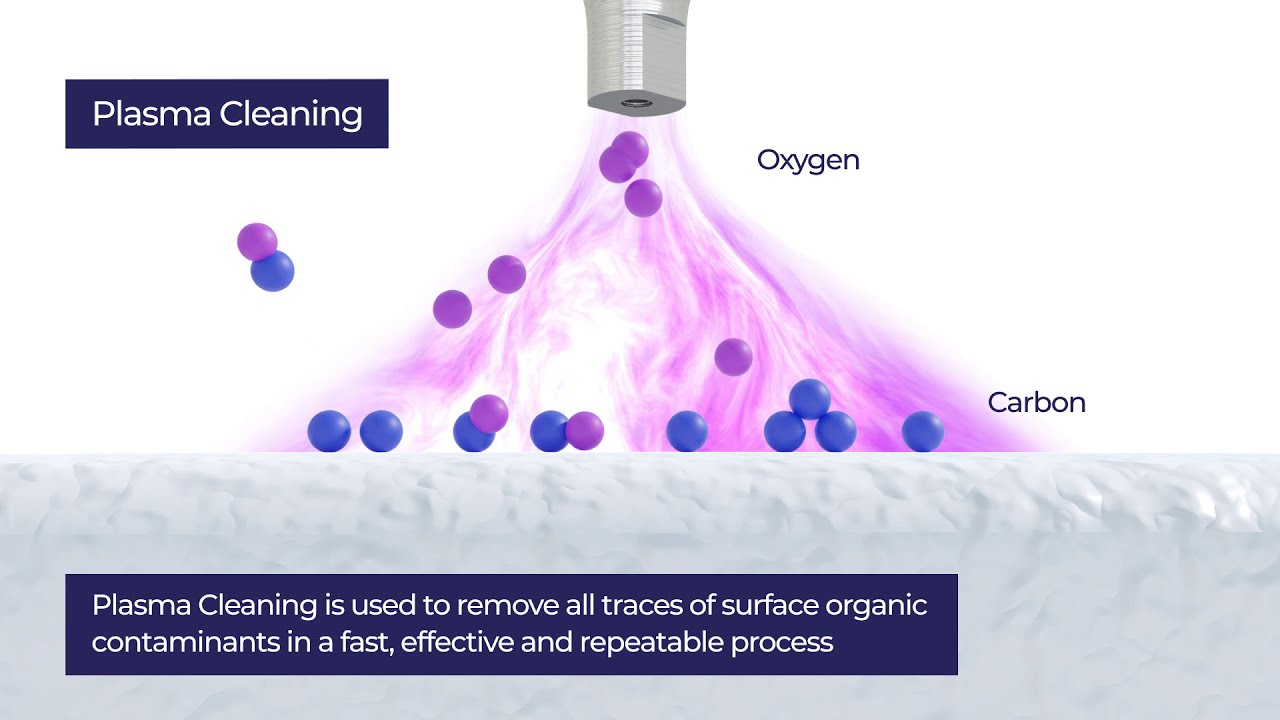
Atmospheric‑pressure plasma generates high‑energy reactive gas species. When directed toward PCBA surfaces, reactive oxygen‑based plasma breaks down organic contaminants into volatile small‑molecule by‑products that dissipate completely, leaving dry, residue‑free surfaces.
Beyond contaminant removal, plasma bombardment achieves physical‑chemical surface activation: it raises substrate surface energy to dramatically improve wet‑out performance for conformal coatings, potting compounds and adhesives. This dual‑function process — precision cleaning plus surface activation — works on PCB substrates, plastics, aluminium and other metals, glass and composite materials when paired with custom transport tooling and fixtures.
The plasma nozzle is mounted to X‑Y‑Z linear servo axes above the conveyor transport track. PCBAs are conveyed into the processing station; operators can define targeted cleaning zones across board surfaces through software control. Selective area processing avoids unnecessary plasma exposure for components sensitive to surface treatment, delivering repeatable, consistent results for every production batch.
Core System Features
✅ Fully‑Automated High‑Volume Atmospheric Plasma Processing
Servo‑driven XYZ motion platform with ball‑screw actuators delivers accurate, repeatable plasma nozzle positioning. Designed to match high‑speed SMT line throughput for continuous mass production.
✅ Compressed‑Air‑Driven Plasma Generation
Plasma is generated purely by shop‑floor compressed air. No expensive auxiliary carrier gas consumables are required, lowering long‑term operational cost. Optional nitrogen generator support is available for special process requirements。
✅ Flexible Deployment Modes
Supports two operating configurations: standalone batch processing, or full inline integration. Compliant with SMEMA communication standards, the system can interlock seamlessly with preceding and following production equipment for lights‑out manufacturing. Custom transport fixtures expand process compatibility to plastics, metals, glass and composite workpieces beyond standard PCBAs。
✅ Eco‑Friendly Dry‑Process Technology
Zero liquid chemicals, solvents or cleaning agents are consumed during operation. No hazardous chemical waste output, reducing environmental footprint as well as waste‑handling overhead for your facility.
✅ Combined Cleaning & Surface Activation Capabilities
Cleaning: Efficiently eliminates micro‑dust, oil, grease, organic residues, inorganic impurities and surface microbial contaminants.
Activation: Elevates substrate surface energy to enhance coating wetting, bonding strength and long‑term adhesion reliability.
✅ Precision Selective Treatment
Programmable processing zones enable localized plasma treatment. Only target regions of the PCBA receive plasma exposure, protecting sensitive electronic parts. On‑line vision‑assisted programming via keyboard and mouse simplifies recipe setup for diverse board variants.
PCBA surface pre‑treatment prior to conformal coating for automotive electronics, power modules, industrial control boards
Surface activation before adhesive bonding, potting and encapsulation processes
Dry residue removal for SMT assemblies post reflow
Pre‑processing for plastic, metal, glass and composite components with custom tooling
Liquid cleaning processes can leave hidden risks. Plasma dry pre‑treatment has become a trusted process for high‑reliability electronics manufacturing. The Vanstron PLS‑450 inline plasma system merges robust industrial hardware, precise motion control and production‑proven atmospheric plasma technology. It helps manufacturers cut rework and scrap rates, stabilise conformal‑coating quality, and boost end‑product field reliability without adding chemical‑handling burdens to your factory.


