
Call Us
+86-15017908688
Website
www.synspeed.com
- All
- Product Name
- Product Keyword
- Product Model
- Product Summary
- Product Description
- Multi Field Search

Views: 0 Author: Vanstron Publish Time: 2026-08-29 Origin: Site


Modern electronics manufacturing faces dual challenges: rising output requirements for potting, encapsulation, adhesive and conformal coating curing, together with growing pressure on valuable factory floor space. Long horizontal tunnel furnaces deliver thermal performance but occupy tremendous production hall footprint, while offline batch ovens introduce manual handling risks, inconsistent process results and production bottlenecks. Vanstron’s VBH‑series Inline Vertical Buffer Curing Oven answers these industry pain points, bringing high‑temperature inline thermal processing into a highly compact vertical form factor, built for continuous SMT and electronics assembly production workflows.

Overview of Vanstron VBH‑Series Vertical Curing Oven
Vanstron engineered the VBH‑series inline vertical curing oven to satisfy demanding thermal curing and drying tasks for PCBs, coated assemblies and potted electronic modules. Two core variants cover distinct thermal process windows:
VBH‑250: Effective operating temperature range from ambient up to 200 °C, designed for high‑temperature curing of encapsulants, high‑grade adhesives, solder paste and thermal‑stable coatings for advanced components.
VBH‑90: Maximum working temperature of 90 °C, optimized for low‑to‑medium temperature potting, coating drying and gentle hardening cycles for temperature‑sensitive electronic assemblies.
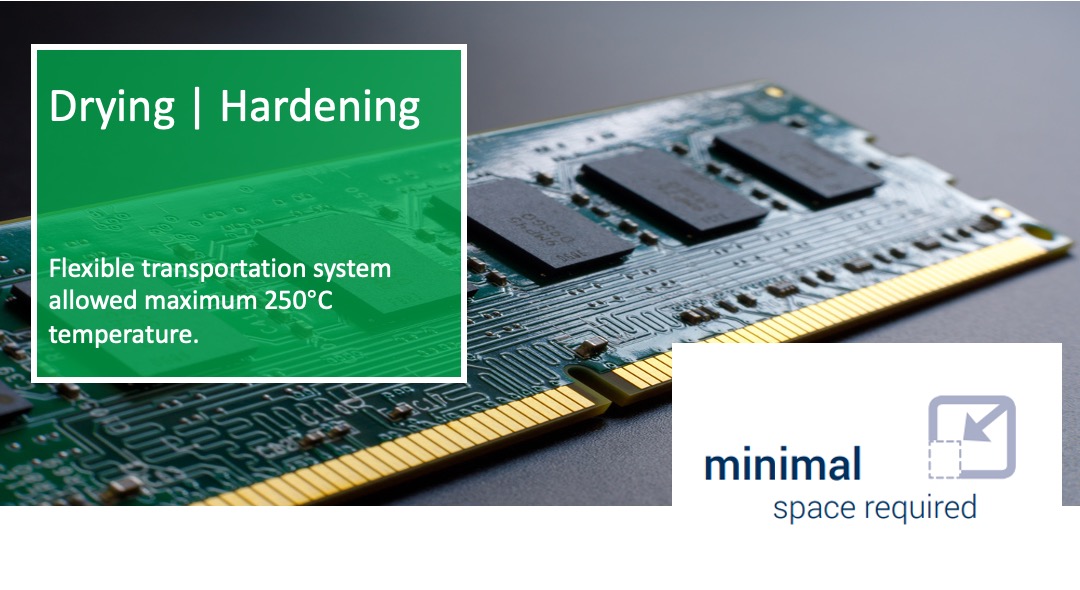
Thanks to its innovative vertical buffer transport architecture, the system achieves comparable throughput to a conventional horizontal furnace of approximately 40 metres length within a machine footprint of merely 2.35 metres in line length. This dramatic space reduction unlocks inline curing capability for factories and clean‑room environments where long horizontal tunnel equipment cannot be physically installed. The oven supports both seamless inline integration via SMEMA interface and standalone operation, delivering stable, log‑gable thermal processes for high‑volume electronics manufacturing
Core Application Fields
The VBH‑series vertical curing oven serves diverse high‑reliability electronics production workflows:
1.PCB Thermal Processing: High‑temperature curing for solder paste, protective conformal coatings, structural adhesives and potting encapsulants on populated printed circuit boards.
2.SMT Assembly Lines: Direct inline connection to dispensing, coating and potting stations; decouples process cycle times to avoid upstream‑downstream bottlenecks without manual transfer.
3.High‑Performance Electronics Manufacturing: Automotive electronics, industrial control modules, power electronics and advanced components requiring controlled thermal stability after potting and encapsulation.
4.Drying & Hardening Workflows: Post‑dispense drying, resin hardening, post‑coating cross‑linking for mixed‑model production with variable PCB sizes and process dwell requirements.
Key Design & Performance Advantages
1. Market‑Leading Space‑Saving Vertical‑Buffer Architecture
Traditional horizontal curing tunnels extend many tens of meters to achieve long dwell times for potting resin cross‑linking. Vanstron’s vertical buffer transport stacks circuit boards vertically inside the oven chamber. Multiple PCBs are processed simultaneously within minimal floor footprint, cutting line‑length requirements massively. Manufacturers preserve valuable production area, simplify clean‑room layout planning and avoid costly facility expansion solely to accommodate curing equipment.
The flexible transport system uses circulating product carriers. Conveyor width auto‑adjusts automatically to match incoming PCB dimensions. Multiple preceding coating or dispensing lines with different board widths can feed mixed products into one single oven unit. It accepts printed circuit boards up to 50 mm maximum component height, supporting heavily populated assemblies and potted modules.
2. Superior Thermal Uniformity & Forced‑Convection Heating
The VBH platform adopts modular forced‑convection heating architecture. Hot‑air velocity is fully software‑adjustable for precise tuning across different material recipes. Temperature uniformity across each pallet reaches ±2 °C, eliminating hot‑spots and cold zones that create partial cure, inconsistent material hardness or product reject risk in potting and coating processes.
Temperature regulation relies on PID closed‑loop control paired with SSR drive hardware. Users program fully custom temperature profiles and individual board dwell time inside the oven, matching cure specifications of epoxy, polyurethane, silicone potting compounds and protective coatings. All thermal events can be logged for traceability in quality‑critical industrial and automotive production.
3. Robust Transportation & Inline Compatibility
Conveyor running direction: right‑to‑left; conveyor working height 900 mm ±50 mm.
Adjustable transport width ranging from 50 mm‑460 mm; product length 50‑500 mm.
Max. board / pallet weight: 5 kg for VBH‑250; 2.5 kg for VBH‑90.
Pallet process edge distance configurable at 5 mm or customer‑specified dimension.
Full SMEMA standard interface for plug‑and‑play connection to upstream dispensers, coaters and downstream assembly equipment.
Buffer storage capacity configurable to match production throughput requirements. Every single PCB’s retention time within the oven is user‑programmable to accommodate variable curing cycle requirements from product to product.
4. Intelligent Control, Diagnostics and Safety
The control system is built around industrial PLC plus human‑machine touch‑screen interface, incorporating comprehensive operational safety and diagnostic functions:
Board‑dropped detection alarm system
Temperature deviation abnormal alarm
PID closed‑loop temperature regulation
Built‑in error diagnosis system for rapid troubleshooting
Multi‑level operator password management
SMEMA communication handshake for line‑wide automation coordination
Standard fume exhaust system for process volatiles generated during potting compound curing.
CE certified electrical design; power input: 380 V, 3‑Phase 50 Hz, meeting international equipment safety norms.
Maintenance access is arranged at comfortable eye‑level for internal components inspection and service work, minimising equipment downtime during production campaigns. Heavy‑duty mechanical construction is engineered for non‑stop continuous high‑temperature manufacturing operation, improving total equipment service life. Optimised thermal insulation reduces surface heat loss and delivers tangible energy‑efficiency gains versus legacy horizontal curing solutions, lowering operational power costs without sacrificing thermal performance.
Why Select Vanstron VBH‑Series over Conventional Curing Solutions
Solution Type | Major Limitations | Vanstron VBH‑Series Value |
|---|---|---|
Long Horizontal Tunnel Oven | Extremely large floor‑space footprint; high capital & facility cost | Only ~2.35 m line length; equivalent curing dwell performance; fits constrained production areas |
Offline Batch Ovens | Manual loading/unloading; process traceability gaps; line‑flow interruptions; potential thermal shock on door opening | True inline automatic workflow; full process logging; no batch‑to‑batch quality deviation |
Basic inline curing systems | Limited temperature range; poor thermal uniformity; fixed transport width | Up to 200 °C capability; ±2 °C pallet uniformity; auto‑width adjustment for mixed‑model production |
Ideal Production Scenarios for VBH‑Series
New production‑line projects with limited available floor space or clean‑room real‑estate constraints.
Potting & encapsulation lines requiring long thermal cure cycles for epoxy or silicone resins.
Mixed‑model high‑mix manufacturing running multiple PCB formats and different curing recipes.
Automotive electronics, industrial controls and power electronics where process traceability and CE compliance are mandatory.
Upgrade projects replacing legacy batch ovens to remove manual handling steps and raise overall line automation maturity.
Final Note
As potting, encapsulation and conformal coating processes become central to modern electronic product reliability, thermal curing equipment should no longer be a production bottleneck. Vanstron’s VBH‑series inline vertical curing oven re‑imagines thermal processing by combining high thermal fidelity, inline automation, and radical space‑saving vertical design.
Whether you need high‑temperature curing up to 200 °C (VBH‑250) or medium‑temperature drying and hardening at maximum 90 °C (VBH‑90), Vanstron delivers configurable, CE‑certified hardware backed by deep application know‑how for electronics potting and thermal process challenges.


